

The Official Supplier for Nuenta
Supplying Nilan systems to Nuenta in the UK
The UK market for mechanical ventilation with heat recovery has never been more crowded, and that is a problem for anyone trying to make a sensible decision. Choosing the best MVHR system for a UK home, development or commercial project is harder than it looks: brochure efficiency percentages differ by only a few points across the leading brands; every manufacturer claims to be quieter than the competition; and units that look identical on paper can deliver very different results once installed. For homeowners, developers and specifiers, the hard part is not finding options, it is knowing which questions to ask before committing to a system.
Nilan UK has been in the practical middle of this decision for over 15 years. As the exclusive UK distributor of Danish-engineered Nilan products, with more than 800 completed projects across residential and commercial sites, they see the gap between specification and real-world performance daily. That operational history informs everything in this guide: the criteria that experienced specifiers use to evaluate units, a side-by-side look at the leading systems, sizing and cost guidance by property type, and a clear buyer’s checklist to carry into your next conversation with an installer.

A brochure efficiency figure, taken on its own, tells you almost nothing useful. Two units can both advertise 95% heat recovery and perform very differently in an occupied home, because the figure is sensitive to the airflow, external static pressure and test conditions at which it was measured. When evaluating units, experienced specifiers look across six core criteria: heat recovery efficiency at the design duty, specific fan power (SFP), acoustic performance, filtration grade, regulatory compliance and compatibility with the wider mechanical system. Each criterion can make or break real-world performance regardless of what the marketing literature says.
Heat recovery efficiency measures how much warmth is transferred from stale extract air to incoming fresh supply air before the extract is expelled outside. Premium whole-house units typically achieve 90, 96% under test conditions. Many specifiers regard sustained performance below about 85% at real operating points as low for a modern whole-house MVHR, particularly in a new build where airtightness standards are high. SFP, expressed in W/(m³/h), measures the electrical energy the fans consume per unit of airflow. Below 0.6 W/(m³/h) is excellent; 0.6, 0.8 is good; above 1.0 starts to erode the energy saving the system is supposed to deliver.
The critical point is that both figures must be compared at the same tested duty point, not at the unit’s best-case free-air condition. SAP Appendix Q listings and EN 13141-7 test data are the credible sources to request from any manufacturer or distributor. If a supplier cannot provide those documents for the exact model you are specifying, that is a meaningful signal.
Approved Document F targets approximately 30 dB LAeq,T in noise-sensitive rooms at minimum ventilation rate. A unit’s published noise figure is only part of the story: duct design, air velocity, silencer placement and commissioning quality all contribute to what an occupant actually hears. Specifying a quiet unit and then installing it with undersized rigid ductwork will produce a noisy system regardless of what the datasheet says.
For filtration, the standard split is F7 on the supply side to capture fine particles and pollen, with G4 or M5 on the extract side to protect the heat exchanger. Nilan also offers ePM1 F9 filters for outdoor-air intakes in heavily polluted locations, though higher-grade filters increase pressure drop and should be accounted for in the system design.
On the compliance side, Part F 2021 requires balanced, continuous mechanical ventilation in new builds with air permeability below approximately 5 m³/(h·m²) at 50 Pa. For projects combining heat recovery ventilation with a low-temperature heating system, the value of a ventilation unit designed to communicate cleanly with a heat pump cannot be overstated.
The brands most commonly specified in UK residential and commercial projects fall into two broad tiers. The premium tier prioritises independently certified performance, low SFP and quiet operation. The mainstream tier prioritises supply-chain familiarity, cost and ease of procurement through housebuilder programmes. Popular MVHR units in the UK span both tiers, so understanding where each brand sits helps narrow the shortlist quickly.
The Zehnder ComfoAir Q is a widely recognised premium unit in UK specification, achieving up to 95, 96% heat recovery efficiency with a typical SFP in the 0.5, 0.8 W/(m³/h) range. Passivhaus Institut certification provides the strongest independent comparison point, and commissioning support is well-regarded. Brink’s Renovent and Flair ranges sit in a similar performance envelope, with published efficiency up to 95% and an SFP range comparable to Zehnder. Both Zehnder and Brink are worth requesting SAP Appendix Q data for at your specific design duty before shortlisting.
Nilan’s Danish-engineered MVHR range, distributed exclusively in the UK by Nilan UK, occupies the same performance tier. The Compact P2 unit, for example, is designed as a combined MVHR, heat pump and domestic hot water system, with passive heat recovery efficiency of up to 95%, verify the current SAP Appendix Q and EN 13141-7 certification status for your specific configuration with Nilan UK directly, as data may vary by variant. What distinguishes Nilan from most competitors is that heat pump integration is designed in rather than bolted on: the MVHR core, exhaust-air heat pump and hot water cylinder form a single coordinated system, not three separate products that a contractor has been asked to make work together.
Vent-Axia’s Sentinel Kinetic achieves up to 93, 95% efficiency and is among the most widely distributed units in mainstream UK housebuilding. Nuaire’s MRXBOX-ECO reaches up to 95% and is common in apartment developments and larger housebuilder programmes. Airflow and Dantherm also supply MVHR units to the UK market, with Dantherm’s HCV range targeting residential and light-commercial applications. All of these mainstream options carry SAP Appendix Q data and EN 13141-7 test results, making them straightforward to specify compliantly.
For published SFP and acoustic performance, manufacturer data for premium models such as Zehnder and Nilan tends to compare favourably, though ranges overlap and results are installation-dependent. None of the mainstream options listed above offers the same native heat pump integration as the Nilan Compact range.
Installation quality remains the biggest single variable across all brands. Site audits have documented cases where units marketed at 90% heat recovery delivered closer to 50% in operation following a poor installation, a pattern that underlines the point that brand choice is only one part of the equation. Correct specification, good ductwork design and rigorous commissioning matter as much as the unit itself.
Request the SAP Appendix Q entry and EN 13141-7 test data for the exact model at your project’s actual design airflow and external static pressure. Where a Passivhaus Institut certificate exists, it provides the most useful independent comparison. Never compare units at different test duties: a low SFP figure quoted at a very low airflow is not a fair comparison against a competitor’s figure at a higher design pressure.
The most common sizing mistake is selecting unit capacity by floor area alone. Approved Document F sets minimum whole-dwelling continuous rates, 31 L/s for a three-bedroom home and 37 L/s for a four-bedroom, but wet-room extract totals and occupancy loads can govern instead. A property with three bathrooms and a utility room will often need more extract capacity than the bedroom-based minimum suggests.
For a compact one-to-two-bedroom flat or open-plan home, a unit with nominal capacity around 150, 200 m³/h is typical, sized to operate at 60, 70% of maximum fan speed to preserve headroom for boost. A three-bedroom semi needs a unit delivering comfortably within its performance curve at around 150, 250 m³/h maximum capacity. A four-bedroom detached home, with longer duct runs and additional wet rooms, generally requires 200, 350 m³/h once pressure drops are accounted for. These are planning ranges: the actual design requires a room-by-room airflow schedule and a duct pressure-drop calculation.
The most damaging installation errors follow a consistent pattern. Watch out for:
Each of these errors degrades delivered performance, sometimes significantly.
Installation cost is the largest single outlay, and the range is wide. For a typical three-bedroom new build, a realistic installed budget, covering the unit, ductwork, commissioning and balancing, sits in the region of £5,000, £8,000. These figures are indicative market averages and may vary depending on whether VAT, making-good and commissioning are included; confirm the full scope with your installer. A retrofit of the same property typically runs £7,000, £10,000, with difficult retrofits requiring opened ceilings potentially reaching £14,000 or more.
Running costs are modest by comparison. Fan electricity for an efficiently sized system costs £30, £80 per year for most households; a larger four-bedroom installation consuming around 300 kWh annually would cost approximately £156 at current tariffs. Filter replacement runs £30, £120 per year depending on grade and replacement frequency: F7 supply filters and G4 extract filters should be inspected every three to six months and replaced at least annually, more often near busy roads or construction sites. Including an annualised allowance for professional servicing, a realistic annual budget is £150, £350.
That running cost sits against a meaningful energy return. At 90, 95% heat recovery efficiency, the unit is continuously preheating incoming fresh air using warmth that would otherwise be expelled outside. Across a full heating season, that reduces the load on your primary heat source, whether that is a heat pump, a boiler or a district system.
Before committing to any unit or installer, put these questions directly to whoever is proposing the specification. The answers reveal whether the design is grounded in tested performance data or in catalogue assumptions.
For property size guidance: compact units in the Nilan Comfort CT150/CT200 family suit flats and smaller homes; mid-range units in the Comfort 300LR and 350 families handle three and four-bedroom homes; larger capacity units, including the Comfort 450 and commercial ventilation systems handling up to 32,000 m³/h, scale to developments and commercial sites. Where heat pump integration is on the table, the Nilan Compact P2 combined MVHR and heat pump system is worth examining in detail, a key advantage is that system design and aftercare responsibility can sit with a single UK distributor, rather than being spread across multiple manufacturers. Confirm the specific terms and certification status for your project directly with Nilan UK.
Nilan UK provides full technical specification support, project sizing assistance and installer resources directly. If you are at the shortlisting stage, get in touch with the Nilan UK team for a project-specific recommendation and sizing review.
The best MVHR system for a UK project is not the one with the highest brochure efficiency figure. It is the one correctly specified for the design duty, installed with properly sized and insulated ductwork, commissioned to a measured and recorded standard, with airflow results and a commissioning certificate tied to the SAP Appendix Q duty point, and supported by a distributor with genuine experience in the UK market. Mechanical ventilation with heat recovery delivers on its promise only when every part of that chain holds.
Nilan UK’s combination of Danish-engineered products, 15 years in the UK market and over 800 completed projects puts the right expertise at the start of that process. Use the checklist above, request EN 13141-7 and SAP Appendix Q data for the exact model at your design duty, and treat commissioning documentation as a non-negotiable deliverable. The best MVHR system for your project is knowable. It just requires asking the right questions of the right people before you sign off the specification.
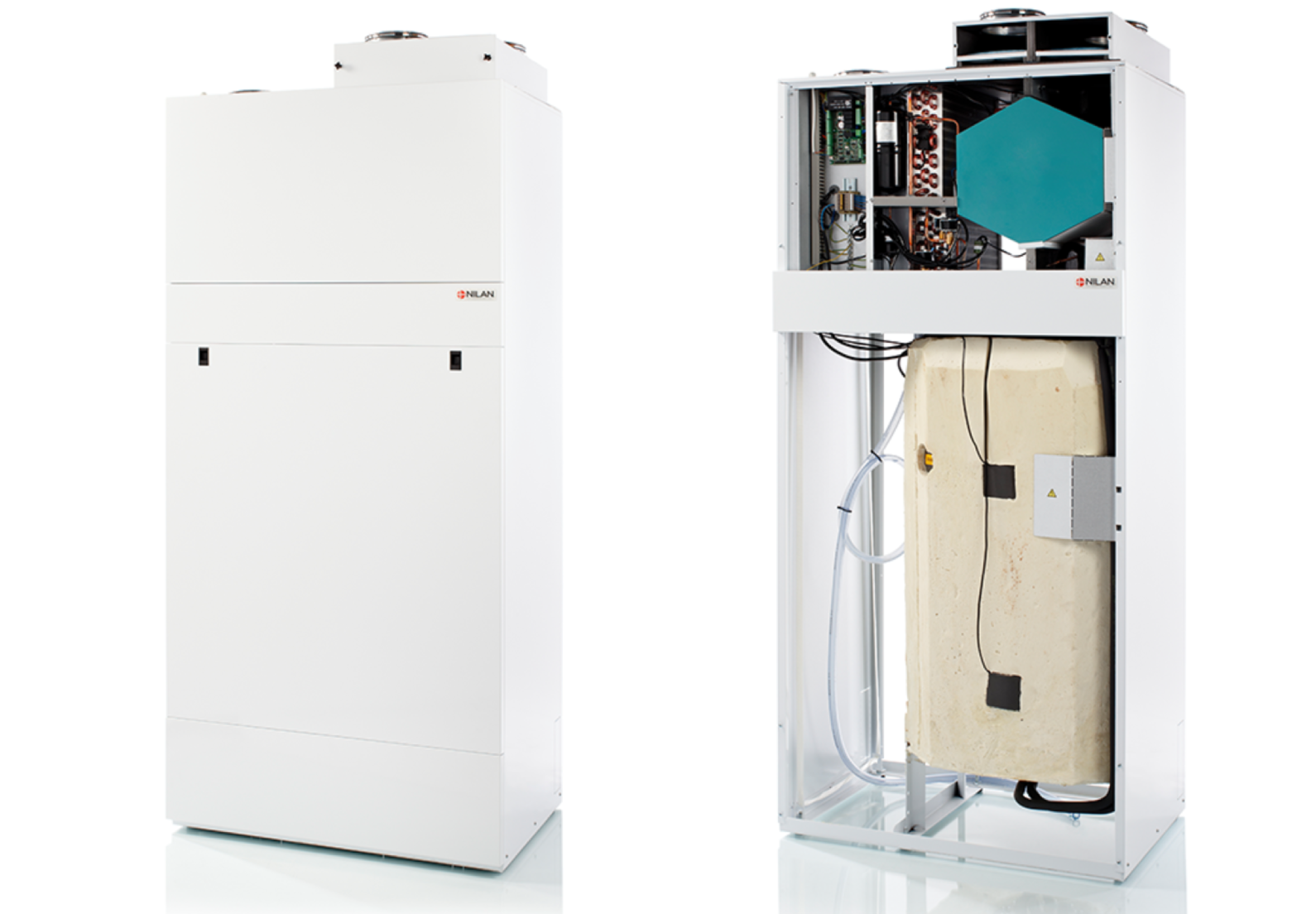 Nilan Compact P Basic: A Guide to Efficient Home Ventilation
 Common Problems with Heat Pumps
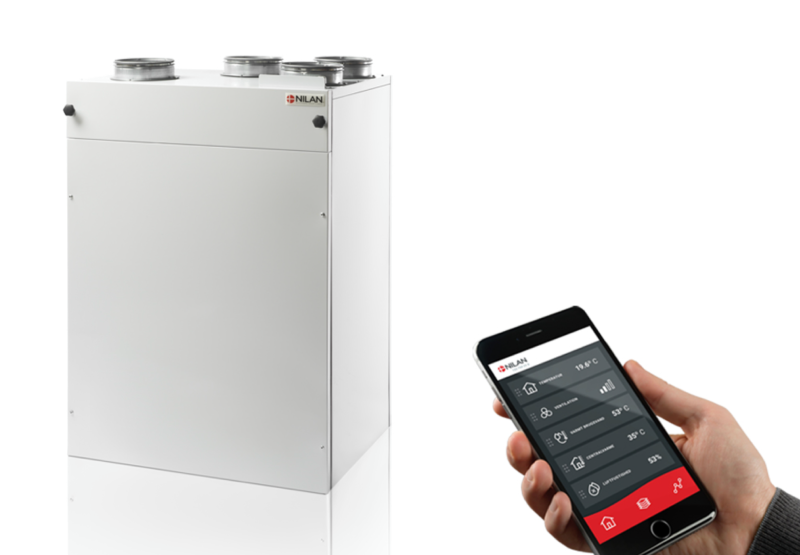 The Nilan Comfort CT500: A Powerful Centralised Ventilation System
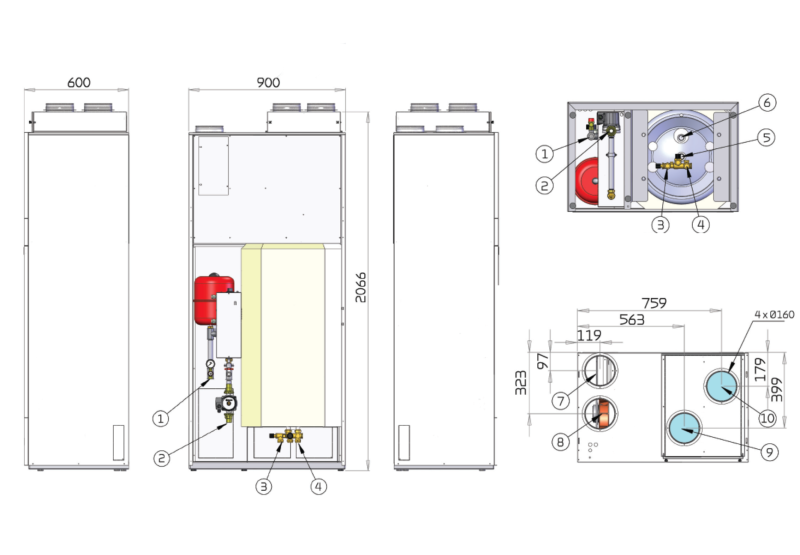 Nilan Compact P EK: A Revolutionary Ventilation System for Modern Buildings
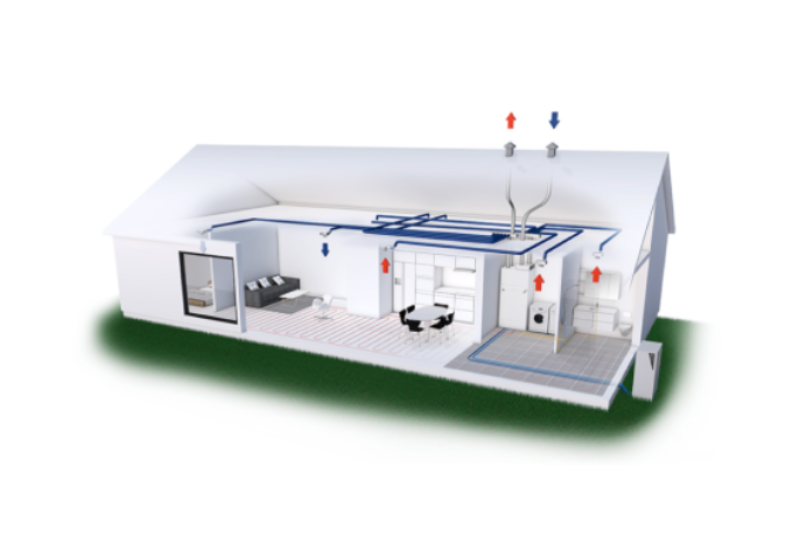 5 Benefits of a Heat Pump – All Explained
 How To Save Money By Choosing The Right Nilan Installer For Your Home
 The Complete Guide To Properly Maintaining Your MVHR System
 Are Stirling Engine Heat Pumps The Future Of Heating Systems?
 Are Ground Source Heat Pumps The Eco-Friendly Choice For You?
 MVHR with Cooling: Boosting Comfort and Energy Efficiency